cheese (4)

31061768687?profile=RESIZE_400xThis study (purchase required) used, high-performance liquid chromatography, combined with chemometric analysis, to classify buffalo vs cows ricotta based on the profile of water soluble peptides.  The authors then identified specific peptides that could be used as species markers . Both mid-infrared spectroscopy and electrophoresis were also investigated as peptide measurement methods by were found to give insufficient discrimination, with IR overly affected by storage time of the extracts.

The authors created  11 experimental cheese formulations by increasing the proportions of cow whey mixed with buffalo whey. Water-soluble peptides were analysed using mid-infrared spectroscopy, high-performance liquid chromatography and electrophoresis. The data obtained from mid-infrared spectroscopy and high-performance liquid chromatography were statistically processed using principal component analysis, analysis of covariance and multiple linear regression..

High-performance liquid chromatography identified 14 peptide peaks, with three recognized as specific markers for cow whey in adulterated samples. PCA explained 77% of the variance, distinguishing pure and adulterated ricotta. Multiple linear regression modelling of high-performance liquid chromatography data predicted cow whey concentration with a correlation of R = 0.87. High-performance liquid chromatography with chemometrics was effective for detecting buffalo ricotta adulteration.

When applied to 14 commercial samples, the model suggested that nine contained adulteration ranging from 10% to 100% cow whey.

Photo by Conor Brown on Unsplash

Read more…

13660285272?profile=RESIZE_400xSpectroscopic techniques are non-destructive, rapid, and often cost-effective tools for detecting cheese adulteration. Cheese is one of the foods most frequently reported as adulterated or misrepresented, particularly when including misrepresentation of PGO or PDI production methods or origin.

This review (open access) references 104 studies and describes the range of vibrational, nuclear magnetic, and mass spectrometric techniques which have been applied for cheese authentication, including Near-Infrared (NIR), Mid-Infrared (MIR), Fourier-Transform Infrared (FTIR), Raman, and Nuclear Magnetic Resonance (NMR) spectroscopy MS-based methods . Emerging non-invasive sensor-based technologies such as electronic nose (E-nose) systems have also been explored in dairy product monitoring and are covered in the review.

The authors consider that each technique offers distinct advantages based on its operational principle and application context. NIR spectroscopy, for example, has demonstrated utility in detecting water addition, milk source substitution, and fat adulteration in a variety of cheese matrices with minimal sample preparation FTIR and ATR-FTIR are valuable for functional group detection and surface compositional analysis, offering rapid screening capabilities . Raman and its variants, such as Surface-Enhanced Raman Spectroscopy (SERS) and Spatially Offset Raman Spectroscopy (SORS), provide molecular vibrational fingerprints useful for identifying foreign substances and analyzing samples through packaging.  1H NMR spectroscopy has gained prominence due to its high-resolution metabolomic profiling capabilities and its ability to differentiate PDO cheeses from non-authentic counterparts based on lipid and aqueous phase biomarkers .

Advanced mass spectrometry-based techniques, including LC-MS/MS and MALDI-TOF-MS, have also been effectively utilized for the detection of protein-based adulterants and species-specific peptides in complex cheese matrices, enabling quantification at trace levels.  Isotope Ratio Mass Spectrometry (IRMS) and other isotope-based techniques have proven crucial in verifying geographical and botanical origin by assessing stable isotope compositions such as δ13C, δ15N, and δ34S

The authors aim to provide stakeholders—including researchers, quality control laboratories, and regulatory agencies—with an informed perspective on the strengths and limitations of each technique, thereby supporting the development of more robust authentication frameworks within the dairy industry.

Photo by Andra C Taylor Jr on Unsplash

Read more…

13416376885?profile=RESIZE_400xHalloumi produced in Cyprus has a transitional exception until 2029 from the EU PDO regulations which stipulate that >50% of the milk content must be from sheep or goats.  This is because of the relatively low sheep/goat milk production on the island.  However, national Cypriot law still stipulates that the sheep/goat milk content must be >19% during this transition.  Major dairy companies on Cyprus have lobbied against this transitional law, arguing that it is unachievable without large scale import of sheep/goat milk powder.

It has been reported that a 2024 survey of one of the largest halloumi brands on sale in Cyprus found sheep/goat milk content at only 5%.  The same newspaper also reports that the regulators are working with Bureau Veritas on building a reference database of compositional parameters, to address longstanding analytical challenges in verifying the sheep/goat milk content of imported milk powder.

Photo by Ambitious Studio* | Rick Barrett on Unsplash

Read more…

The grate cheese robbery

13172052897?profile=RESIZE_710xMore than 22 tonnes of three artisan award-winning cheddars worth more than £300,000 stolen from London cheese specialist in October 2024

Fraudsters posing as legitimate wholesalers received the 950 clothbound cheeses from the company before it was realised they were a fake firm.

The London Metropolitan Police has confirmed it is investigating "the theft of a large quantity of cheese".

Why cheese theft is on the rise

Food-related crimes – which include smuggling, counterfeiting, and out-and-out theft – cost the global food industry between US $30 to 50 billion a year (£23-£38 billion), according to the World Trade Organisation. These range from hijackings of freight lorries delivering food to warehouses to the theft of 24 live lobsters from a storage pen in Scotland.

But a number of these food crimes have also targeted the cheese industry – and in particular luxury cheese.

In 2023, around £50,000 worth of cheese was stolen from a trailer in a service station near Worcester, UK. It’s happening elsewhere in Europe, too: in 2016, criminals made off with £80,000 of Parmigiano Reggiano from a warehouse in northern Italy. This particular type of parmesan, which requires at least a year to mature, is created by following a process that has been in place, with little modification, for almost 1,000 years. At the time of the heist, Italy’s Parmigiano Reggiano Consortium told CBS news that about $7 million (£5.4m) worth of cheese had been stolen in a two-year period.

13172095297?profile=RESIZE_710x

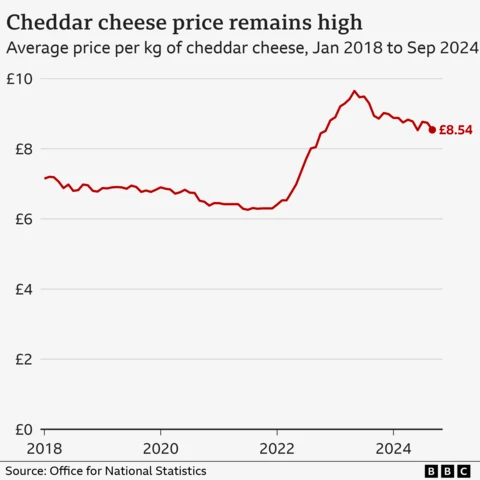
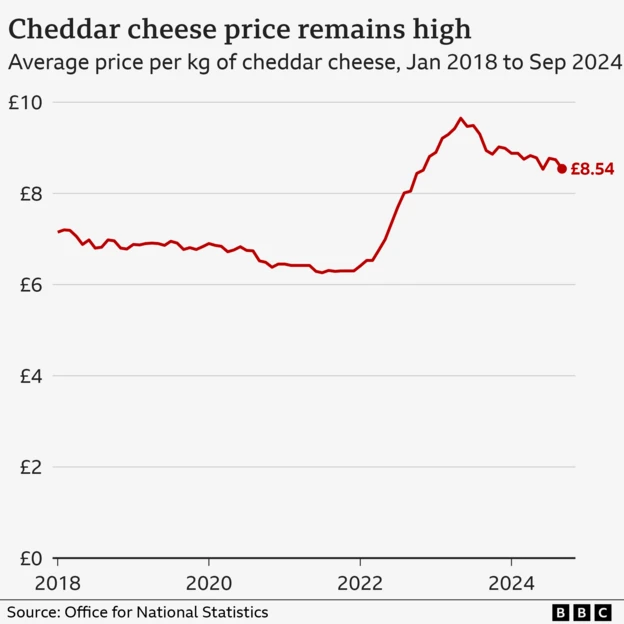
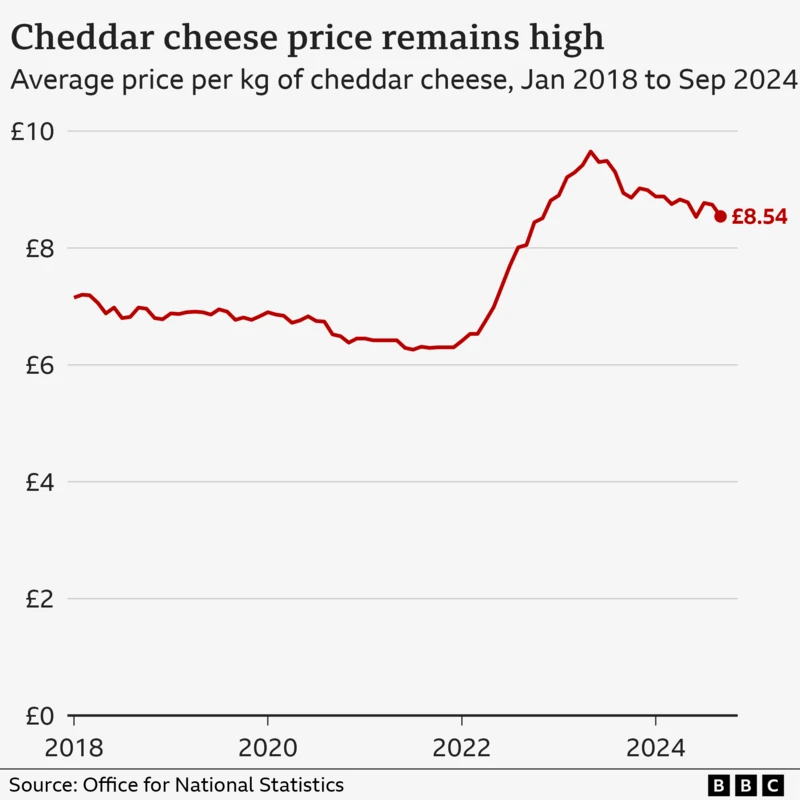
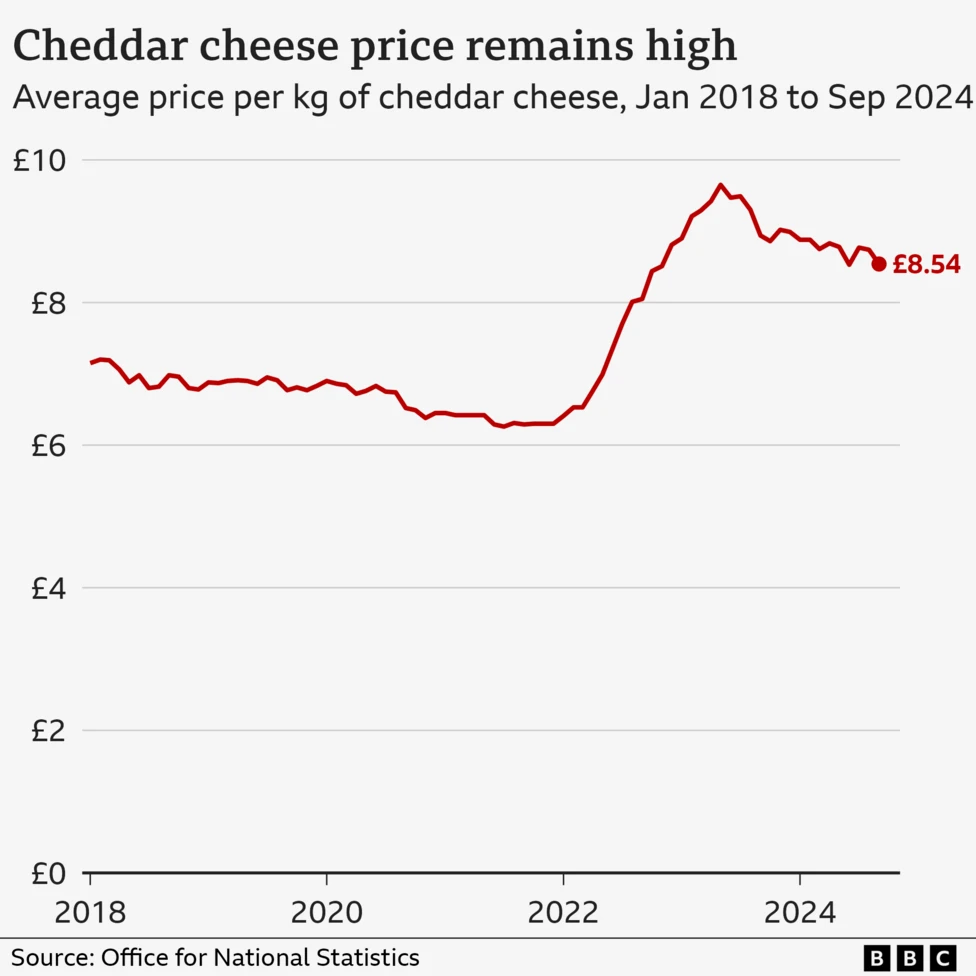
The problem is only set to rise across the industry as cheese becomes more valuable. The overall price of food and non-alcoholic drinks in the UK rose around 25% between January 2022 and January 2024, according to the Office for National Statistics. Cheese, meanwhile, saw a similar price hike in the space of a single year.

How organised crime infiltrated the food industry

“There is a long-established connection between food and organised crime,” says Andy Quinn of the National Food Crime Unit (NFCU), which was established in 2015 following the 2013 horse meat scandal. One example of this is the high proportion of illegal drugs smuggled through legal global food supply chains.

In September, dozens of kilograms of cocaine were found in banana deliveries to four stores of a French supermarket, with police unsure who the intended recipient was. For the drugs to reach the end of the food supply chain is highly unusual, but this method of transporting illegal items across borders in containers of food is common.

According to Quinn, once drug cartels and other criminal operators gain a foothold into how a food business operates, they spot other opportunities. “They will infiltrate a legitimate business, take control of its distribution networks and use it to move other illegal items, including stolen food.”

For criminal networks, food has other attractions. “They know crimes involving food result in less severe convictions than for importing drugs,” says Quinn, “but they can still make similar amounts of money.” Particularly if it’s a premium cheese.

The problem for the criminals is what to do with it. “There are few places to offload them,” says Jamie Montgomery, who runs the Somerset farm that was targeted in the 1998 heist. “Shifting that much artisan cheese is difficult.”

This is why people in the industry believe stolen cheese is often sent overseas to countries where there are thriving food black markets – and indeed cheese black markets. 

Microchipped parmesan: Innovative security

Andy Quinn explains: “Food chains are truly global. The same goes for the movement of illegal food.”

Now, many in the industry are fighting back, however. Italy’s Parmigiano Reggiano Consortium – the cheesemakers behind the world’s most stolen cheese – have said that the black market for that variety is “robust”. This is partly down to the fact that it is hugely valuable, generating global sales of almost £3bn a year – and so they have come up with a unique way of protecting it.

In 2022, the consortium began introducing tracking chips, no larger than a grain of rice, as part of the label embedded in the hard rind of the cheese. This helps to reduce thefts, but also means counterfeit Parmigiano Reggiano can be identified, as each tiny chip contains a unique digital ID that can authenticate the cheese.

Buyers can now scan each wheel to check its authenticity or find out if it was stolen. The consortium is yet to release any figures showing whether the technology is cutting down levels of fraud.

“Conflicts around the world, the cost-of-living crisis, even climate change, all increase the appeal for food fraud,” says the NFCU’s Andy Quinn. Until that changes, cheesemakers might need to tighten up their security – and think twice when an order seems too good to be true.

It is crucial to know who you're buying from and who you're selling to; the rise in cybercrime is making this more challenging but nothing replaces establishing good relationships with your stakeholders in trying to mitigate against food fraud as we found in Defra project: Review of Food Fraud drivers and Mitigation Tools.

Read full BBC article.

Read more…