Selvarani Elahi's Posts (452)

Sort by

13173092869?profile=RESIZE_584xThe National Food Crime Unit (NFCU) of the UK Food Standards Agency has issued an AMBER Food Crime Alert on the Risk of Distribution Fraud Thefts from Food Businesses.

There has been a recent increase in the reporting of distribution fraud being used as a method of stealing high value food products from UK based companies.

The method of theft will include impersonating an existing business and using falsified documentation such as email addresses, invoices or even fake websites.

WHY HAS THE NFCU ISSUED THIS ALERT?
This alert is based on recent reports of this methodology being used in high profile thefts of food. Because of this NFCU is sharing this information via industry groups in England, Wales and Northern Ireland to encourage vigilance to this potential risk, and that food businesses update any risk assessments and processes to increase their resilience to this form of fraud.

           ACTION RECOMMENDED

  1. Ensure that this information is used to inform any vulnerability or fraud risk assessments with appropriate actions in place.
  2. Inform relevant colleagues with responsibility for sales and customer contracts to be aware of any unusual or suspicious activity such as changes to bank details from existing customers or new customers requesting extremely large orders of high value items.
  3. If unsure whether a purchase is legitimate, do not reply directly to contacts via email or messages. Instead use publicly listed information for the company that are attempting the purchase and contact them directly to validate the details you are being given.

CONTACT NFCU - If you become aware of information relevant to this Food Crime Alert, please share with us via:
WEBSITE – visit food.gov.uk and click 'Report' at the top of the page.
TELEPHONE –08000 28 11 80.
EMAIL – foodcrime@food.gov.uk.
Please quote the alert number A002 in correspondence. Our processes enable us to handle information discreetly.

Read full alert.


Read more…

The grate cheese robbery

13172052897?profile=RESIZE_710xMore than 22 tonnes of three artisan award-winning cheddars worth more than £300,000 stolen from London cheese specialist in October 2024

Fraudsters posing as legitimate wholesalers received the 950 clothbound cheeses from the company before it was realised they were a fake firm.

The London Metropolitan Police has confirmed it is investigating "the theft of a large quantity of cheese".

Why cheese theft is on the rise

Food-related crimes – which include smuggling, counterfeiting, and out-and-out theft – cost the global food industry between US $30 to 50 billion a year (£23-£38 billion), according to the World Trade Organisation. These range from hijackings of freight lorries delivering food to warehouses to the theft of 24 live lobsters from a storage pen in Scotland.

But a number of these food crimes have also targeted the cheese industry – and in particular luxury cheese.

In 2023, around £50,000 worth of cheese was stolen from a trailer in a service station near Worcester, UK. It’s happening elsewhere in Europe, too: in 2016, criminals made off with £80,000 of Parmigiano Reggiano from a warehouse in northern Italy. This particular type of parmesan, which requires at least a year to mature, is created by following a process that has been in place, with little modification, for almost 1,000 years. At the time of the heist, Italy’s Parmigiano Reggiano Consortium told CBS news that about $7 million (£5.4m) worth of cheese had been stolen in a two-year period.

13172095297?profile=RESIZE_710x

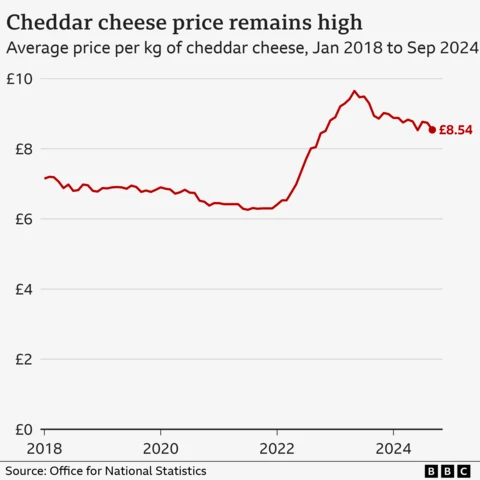
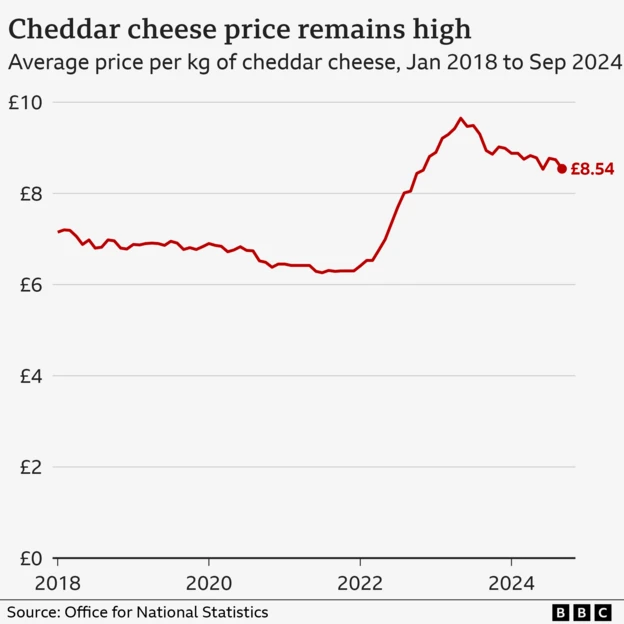
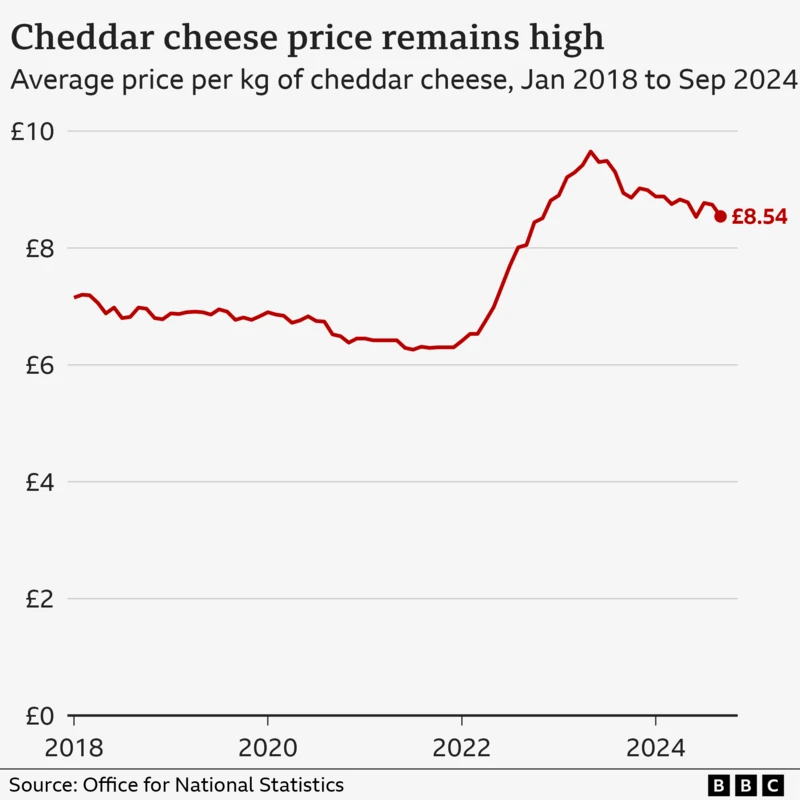
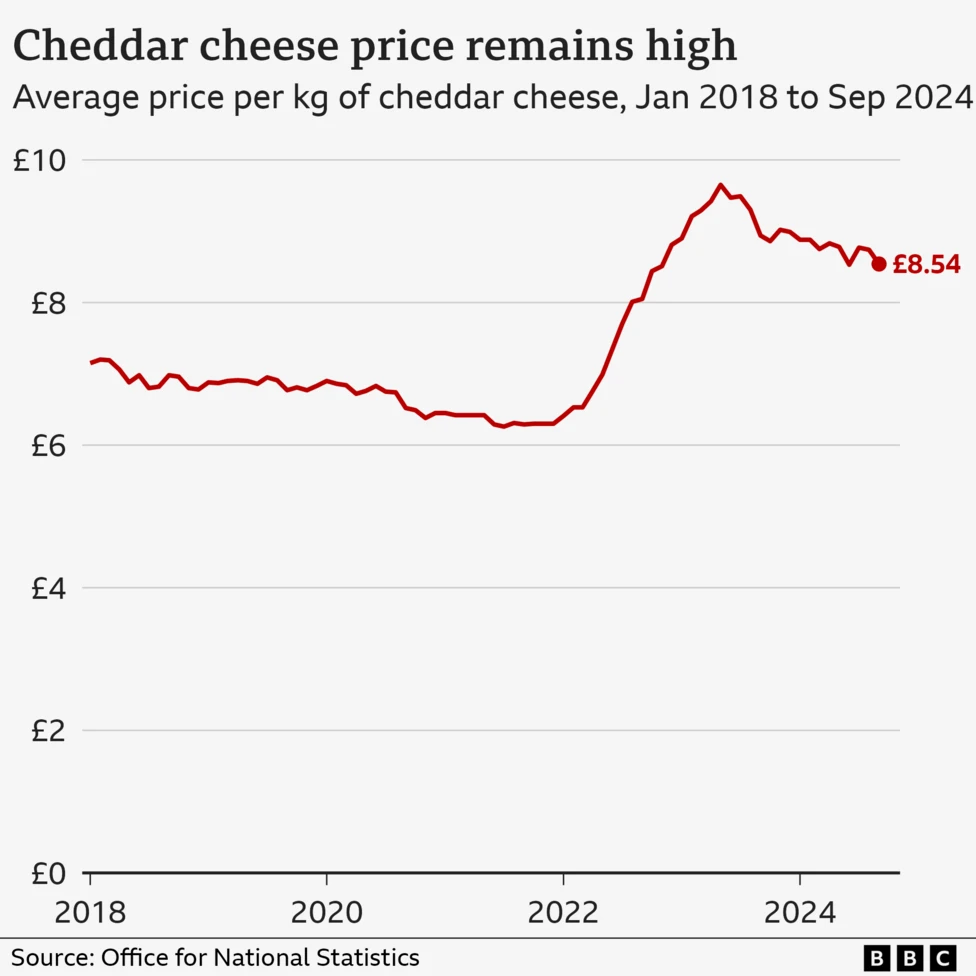
The problem is only set to rise across the industry as cheese becomes more valuable. The overall price of food and non-alcoholic drinks in the UK rose around 25% between January 2022 and January 2024, according to the Office for National Statistics. Cheese, meanwhile, saw a similar price hike in the space of a single year.

How organised crime infiltrated the food industry

“There is a long-established connection between food and organised crime,” says Andy Quinn of the National Food Crime Unit (NFCU), which was established in 2015 following the 2013 horse meat scandal. One example of this is the high proportion of illegal drugs smuggled through legal global food supply chains.

In September, dozens of kilograms of cocaine were found in banana deliveries to four stores of a French supermarket, with police unsure who the intended recipient was. For the drugs to reach the end of the food supply chain is highly unusual, but this method of transporting illegal items across borders in containers of food is common.

According to Quinn, once drug cartels and other criminal operators gain a foothold into how a food business operates, they spot other opportunities. “They will infiltrate a legitimate business, take control of its distribution networks and use it to move other illegal items, including stolen food.”

For criminal networks, food has other attractions. “They know crimes involving food result in less severe convictions than for importing drugs,” says Quinn, “but they can still make similar amounts of money.” Particularly if it’s a premium cheese.

The problem for the criminals is what to do with it. “There are few places to offload them,” says Jamie Montgomery, who runs the Somerset farm that was targeted in the 1998 heist. “Shifting that much artisan cheese is difficult.”

This is why people in the industry believe stolen cheese is often sent overseas to countries where there are thriving food black markets – and indeed cheese black markets. 

Microchipped parmesan: Innovative security

Andy Quinn explains: “Food chains are truly global. The same goes for the movement of illegal food.”

Now, many in the industry are fighting back, however. Italy’s Parmigiano Reggiano Consortium – the cheesemakers behind the world’s most stolen cheese – have said that the black market for that variety is “robust”. This is partly down to the fact that it is hugely valuable, generating global sales of almost £3bn a year – and so they have come up with a unique way of protecting it.

In 2022, the consortium began introducing tracking chips, no larger than a grain of rice, as part of the label embedded in the hard rind of the cheese. This helps to reduce thefts, but also means counterfeit Parmigiano Reggiano can be identified, as each tiny chip contains a unique digital ID that can authenticate the cheese.

Buyers can now scan each wheel to check its authenticity or find out if it was stolen. The consortium is yet to release any figures showing whether the technology is cutting down levels of fraud.

“Conflicts around the world, the cost-of-living crisis, even climate change, all increase the appeal for food fraud,” says the NFCU’s Andy Quinn. Until that changes, cheesemakers might need to tighten up their security – and think twice when an order seems too good to be true.

It is crucial to know who you're buying from and who you're selling to; the rise in cybercrime is making this more challenging but nothing replaces establishing good relationships with your stakeholders in trying to mitigate against food fraud as we found in Defra project: Review of Food Fraud drivers and Mitigation Tools.

Read full BBC article.

Read more…

The Food Authenticity Network is delighted to be a Partner in a new initiative: The European Food fraud Community of Practice: From Outset to Operation(EFF-CoP).13168541673?profile=RESIZE_710x


With €2 million funding under Horizon Europe Coordination and Support Actions, the EFF-CoP is led by Professor Saskia van Ruth, Professor of Food Supply Chain Integrity at UCD School of Agriculture and Food Science.

This new three-year project, starting in January 2025, will bring together a community of scientists, regulators, small- and large-sized businesses, laboratories and other stakeholders to create a research and innovation ecosystem to enhance food authenticity and traceability.

A page will be created on this website to link to the EFF-CoP website so that FAN members can keep abreast of progress.

In addition, you can become a member of the EFF-CoP community by emailing effcop@ucd.ie ✍️ and you can follow the EFF-CoP on LinkedIn.

Read more…

13110691478?profile=RESIZE_400x

This publication, by the Food Safety Authority of Ireland (FSAI), identifies a range of analytical techniques that, when performed by expert laboratories incorporating suitable controls, could identify anomalies within a food which may help to determine the authenticity of that food.

This report has been prepared in response to a request for advice from the FSAI to its Scientific Committee. The report indicates specific or general analytical controls and criteria that are required to ensure that the results obtained are reliable and reproducible.

The report also emphasises that to be fit for purpose, laboratory techniques and their application must incorporate various critical controls at the sampling, processing, and analysis stages.

The report addresses two important questions:

  1. What are the essential criteria (e.g. specificity, linearity, range, accuracy, reproducibility, precision, etc.) for unaccredited analytical techniques to be acceptable and reliable tools in examining the food chain, particularly in assessing food authenticity?
  2. For the different categories of analytical tests (e.g. spectroscopic, molecular, omics etc.), what are the analytical controls feasible or necessary to ensure that methods are fit for purpose and results are accurate, reliable, and reproducible?

 This report has also been added to the Quality section of this website.

Read more…

13003660301?profile=RESIZE_584xThe latest edition of the Foods Standards Agency's National Food Crime industry newsletter has been published.

This edition covers:

  • 2024 FSA and FSS Food Crime Strategic Assessment.
  • Counterfeit Vodka.
  • Sustainability Claims. 
  • Good practice for ‘goods in’ stock. 
  • Meat composition and labelling. 
  • Horizon scanning. 

Read the bulletin.

You can contact the NFCU Prevention team to feedback, raise a concern or possibly contribute to a future update.

Read more…

12998681485?profile=RESIZE_710x'Our Food 2023: An annual review of food standards across the UK.' has been published today by the UK Food Standards Agency (FSA) and Food Standards Scotland (FSS).

This is the third in a series of annual reports since the UK left the EU. Our Food 2023 is an evidence-based assessment of food standards across all four nations of the UK.

The analysis conducted suggests that food standards in the UK remained stable during 2023. Yet there are questions about the resilience of our food system for the future. So, FSA and FSS are highlighting three areas that government, businesses and regulators need to work together to address.

1️⃣ More needs to be done to ensure that consumers can access safe, nutritious food against a backdrop of rising prices.

2️⃣ After a long-term decline in numbers, pressure on the local authority workforce continues, with a significant backlog in the number of food businesses awaiting inspection.

3️⃣ Without a reliable and secure resourcing model for Official Veterinarians, there is increased risk of disruption to the UK meat chain in the years ahead due to staff shortages, as well as increasing costs that will be passed on to businesses and consumers.

FSA and FSS are asking government, industry and regulators to work together on these and the other challenges highlighted in this report. The cooperation of everyone in the food system, from government departments and food businesses, to our colleagues in local authorities, remains essential for ensuring people have access to safe, healthy and sustainable food.

Read the full report.

Read more…

12992511667?profile=RESIZE_584xThe UK Department for Environment, Food and Rural Affairs (Defra) is running a campaign to recruit three new members to the Food Authenticity Methodology Working Group (AMWG). 

Applications are welcomed from any candidate who has the knowledge, skills and experience required for the role and who meets the essential criteria. More information about the role can be found in the Candidate Pack. The deadline for applications is 12 noon on Friday 15th November 2024.

Information about the vacancies is given below: 

 The AMWG is a non-statutory expert committee of the Department for Environment, Food and Rural Affairs (Defra). The Committee provides expert advice on research carried out under Defra’s Food Authenticity Programme and is accountable to the Agri-Food Science Team within Defra’s Agri-Food Chain Directorate.  

The Chairs of expert committees meet annually with Defra’s Chief Scientific Advisor; and provide an annual summary of the work of the Committee to the Science Advisory Council (SAC) for Defra's Annual Report.     

Defra wants to attract high-calibre and forward-thinking applicants from diverse backgrounds to its expert committees. Applicants will need to demonstrate they are able to carry out a full range of non-executive responsibilities and have relevant skills, knowledge and expertise. Defra is seeking to appoint up to three new members to AMWG to cover the broad range of expertise required.  

Applications will be assessed against the following general essential criteria: 

  • Experience in dealing with complex technical authenticity challenges, recognised expertise in food analysis and an understanding of fitness for purpose requirements and validation concepts for authenticity methods. 
  • Demonstrable collaborative working and a willingness to enhance the UKs standing in the field of authenticity testing as well as the ability to understand and value different perspectives and to build productive relationships both within and outside the Committee.  
  • Ability to think analytically and creatively and to contribute effectively to the formulation of sound scientific-based advice and decisions.   
  • Ability to express views cogently and clearly, to represent views to the Committee and the Committee’s views to Government and other stakeholders.  

In addition to the above general food authenticity expertise and skills, we are seeking new members who have a good understanding or experience of at least one of the following:  

  • Physical and chemical methods in particular spectroscopic and screening methods   
  • Food Industry experience, supply chain assurance and traceability  
  • AI/digital technology  
  • Molecular Biology and Genetic technologies   
  • A qualified Public Analyst with experience of Food analysis in a legal setting.    

 If you have any queries by email AMWGSecretariat@defra.gov.uk.  


Read more…

Two new IAEA E-learning resources added

12957847063?profile=RESIZE_710xTwo open access, E-learning resources from the International Atomic Energy Agency (IAEA) have been added to the E-Seminars section of our Training section:

In order to access these free courses, you need to register for an IAEA Nucleus account first here. 

Read more…

12886154481?profile=RESIZE_584xThe July 2024 edition of the monthly report on EU Agri-Food Fraud suspicions has been published.

This month's suspicions were retrived from 833 IRASFF notifications and the vast majority of fraud suspicions fell into the categories of implicit claim voilations, product tampering and record tampering. The five products categories with the most fraud suspicions were:

  • Fruits and vegetables
  • Dietectic foods, food supplements and fortified foods
  • Cereals and bakery products
  • Herbs and spcies
  • Meat and meat products (excluding poutltry).

View this month's and all 2024 reports at: FFN monthly - European Commission (europa.eu)

Read more…

12861610099?profile=RESIZE_710x

Job Description: Food Authenticity Specialist(P4) - (2024/0453 (020249))

Organization: NAFA-Food Safety and Control Laboratory

Primary Location: Austria-Lower Austria-Seibersdorf-IAEA Laboratories in Seibersdorf

Job Posting: 2024-08-09, 8:15:53 AM

Closing Date: 2024-08-30, 10:59:00 PM

Duration in Months: 36
Contract Type: Fixed Term - Regular
Probation Period: 1 Year
Full Competitive Recruitment: Yes
  

IMPORTANT NOTICE REGARDING APPLICATION DEADLINE: Please note that the closing date for submission of applications is indicated in local time as per the time zone of the applicant's location.

Role

The Food Authenticity Specialist is: (1) a technical officer and research coordinator, ensuring the efficient and effective development, implementation and dissemination of research, training and scientific and technical knowledge, and assisting in the evaluation and implementation of technical cooperation projects for the IAEA and FAO; (2) a technical expert, planning and conducting technical meetings and project review missions; (3) a facilitator, working with Member States to meet their national and regional agricultural development objectives, and; (4) a liaison with relevant stakeholders on issues related to the transfer of sampling and analytical technologies to Member States.

Apply online.

Read more…

12803795253?profile=RESIZE_710xAbstract

Honey authentication is a complex process which traditionally requires costly and time-consuming analytical techniques not readily available to the producers.
 
This study aimed to develop non-invasive sensor methods coupled with a multivariate data analysis to detect the type and percentage of exogenous sugar adulteration in UK honeys. Through-container spatial offset Raman spectroscopy (SORS) was employed on 17 different types of natural honeys produced in the UK over a season. These samples were then spiked with rice and sugar beet syrups at the levels of 10%, 20%, 30%, and 50% w/w. The data acquired were used to construct prediction models for 14 types of honey with similar Raman fingerprints using different algorithms, namely PLS-DA, XGBoost, and Random Forest, with the aim to detect the level of adulteration per type of sugar syrup.
 
The best-performing algorithm for classification was Random Forest, with only 1% of the pure honeys misclassified as adulterated and <3.5% of adulterated honey samples misclassified as pure. Random Forest was further employed to create a classification model which successfully classified samples according to the type of adulterant (rice or sugar beet) and the adulteration level.
 
In addition, SORS spectra were collected from 27 samples of heather honey (24 Calluna vulgaris and 3 Erica cinerea) produced in the UK and corresponding subsamples spiked with high fructose sugar cane syrup, and an exploratory data analysis with PCA and a classification with Random Forest were performed, both showing clear separation between the pure and adulterated samples at medium (40%) and high (60%) adulteration levels and a 90% success at low adulteration levels (20%).
 
The results of this study demonstrate the potential of SORS in combination with machine learning to be applied for the authentication of honey samples and the detection of exogenous sugars in the form of sugar syrups. A major advantage of the SORS technique is that it is a rapid, non-invasive method deployable in the field with potential application at all stages of the supply chain.
 
Read more…

12803775681?profile=RESIZE_710xHighlights

  • DNA from rice and corn detected in honey spiked with 1% syrup.

  • Natural marker amplification in honey was used to develop an adulteration threshold.

  • Plastid markers were more efficient for adulteration detection in honey.

  • The method was successful with different syrups and various honey types.

Abstract

Honey is a valuable and nutritious food product, but it is at risk to fraudulent practices such as the addition of cheaper syrups including corn, rice, and sugar beet syrup.

Honey authentication is of the utmost importance, but current methods are faced with challenges due to the large variations in natural honey composition (influenced by climate, seasons and bee foraging), or the incapability to detect certain types of plant syrups to confirm the adulterant used.

Molecular methods such as DNA barcoding have shown great promise in identifying plant DNA sources in honey and could be applied to detect plant-based sugars used as adulterants. In this work DNA barcoding was successfully used to detect corn and rice syrup adulteration in spiked UK honey with novel DNA markers.

Different levels of adulteration were simulated (1 – 30%) with a range of different syrup and honey types, where adulterated honey was clearly separated from natural honey even at 1% adulteration level. Moreover, the test was successful for multiple syrup types and effective on honeys with different compositions. These results demonstrated that DNA barcoding could be used as a sensitive and robust method to detect common sugar adulterants and confirm syrup species origin in honey, which can be applied alongside current screening methods to improve existing honey authentication tests.

Read full article: https://doi.org/10.1016/j.foodcont.2024.110772

Read more…

12796419264?profile=RESIZE_400xIn April 2024, members of the Global Alliance on Food Crime (GA) met in person for the first time since the COVID 19 pandemic.  The meeting took place in Singapore over 2 days and tied in with the Global Food Safety Initiative (GFSI) conference which was being held within the city at the same time.  Representatives from all five founder member countries of the GA were in attendance, either in person or virtually for the duration of the meeting. 

Since COVID, the group have met on-line twice a year to discuss matters of mutual interest, however, these meetings have had to take place late into the evening and early morning in order to allow for the time differences.  Getting together face to face allowed most of the group to meet one another in person for the first time, which allowed for in depth discussion on an extensive agenda that covered the 2 day meeting.  One of the main areas of discussion, however, focussed on the GA’s strategic objectives and how the group could deliver outcomes to support these. The strategic objectives are to:

  •  Prevent food rendered unsafe or inauthentic through intentional acts of fraud or misrepresentation from entering or remaining in food supply chains;
  •  Increase enforcement action in relation to food fraud, through collaborative activity, in accordance with relevant national food or criminal law
  •  Support global prevention, detection and enforcement capability and capacity in this area; and
  •  Facilitate and build a global information sharing network amongst the global alliance members to prepare and respond to food fraud.

It was clear that each member is already doing work in these 4 areas and a first step would be to capture all that work and consider where the focus needs to be moving forward.

Other things that were discussed at the meeting were current issues of note, emerging risks, crime prevention activities, good practice that could be shared and collaborative activity, amongst other matters.  The group are planning to meet virtually towards the end of the summer and then again in person to tie in with the Operation Opson meeting that is taking place in November.

Regular updates on the work of the group will be posted the FAN GA page over the next 12 months. 

For more information on the work of the Global Alliance please email ron.mcnaughton@fss.scot.

Read more…

12764913493?profile=RESIZE_710x

The Association of Food and Drug Officials (AFDO) is calling for the urgent modernizing of US food recall processes and the need to enhance data-sharing among federal, state, and local food safety and public health agencies to better protect consumers and ensure swift, effective responses to contamination events.

The recent lead chromate contamination incident in cinnamon applesauce pouches, in which it has been determined that toxic lead chromate was added to cinnamon for economic gain and sickened over 500 children in the US, AFDO say illustrates continued critical gaps in the US national food recall system.

This incident is a good example of where food fraud is also a food safety issue.

Read the full article here: Feature-Cover Story | August/September 2024 | Food Safety Magazine (food-safety.com)


Read more…

12684724692?profile=RESIZE_710xThe May 2024 edition of the monthly report on EU Agri-Food Fraud suspicions has been published.

This month's suspicions include a cocktail of pesticides residues, a flavor of natural mineral water, some food supplements with unauthorized ingredients and a few veterinary medicines residues.

View this month's and all 2024 reports at: FFN monthly - European Commission (europa.eu)

Read more…